- AJ Izdelki
- Blog
- Ergonomija na delovnem mestu
- How to switch from sitting to standing at work
How to switch from sitting to standing at work
What's the best balance between sitting and standing?
The first thing to know is that the optimum solution will see you switching between standing and sitting during your workday. Research has shown that sitting all day can lead to health conditions including obesity, type 2 diabetes, cancer, heart disease and musculoskeletal problems.
However, standing for long periods isn't the answer either, it can cause tiredness and discomfort as well as damage to lower joints, inflammation in the feet and legs, and muscular fatigue. Varying your position and adding more movement to your day is key.
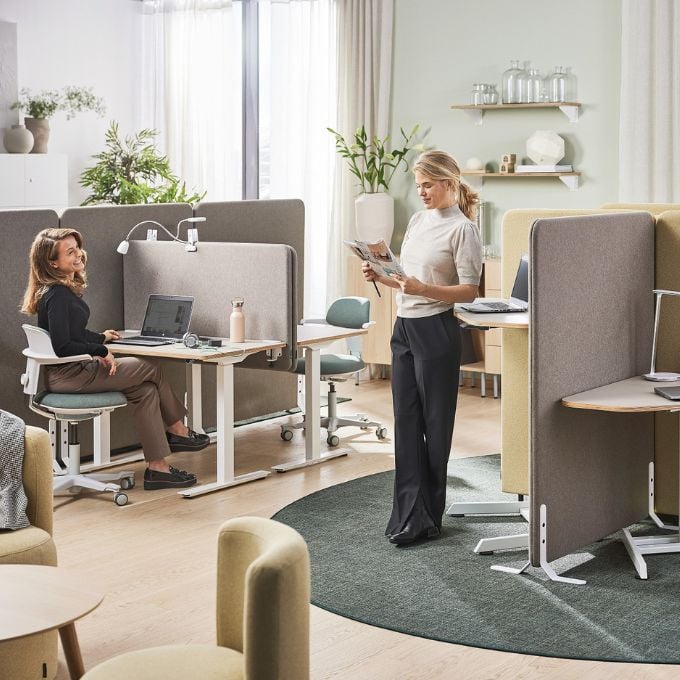
Use a sit-stand desk to make switching easy
Replacing your old desk with a sit-stand desk featuring an electric motor makes it easy to switch from sitting to standing at the push of a button. This lets you vary your position whenever you want, standing for as much or as little time as you can manage.
How long should you stand each day? Start slowly
We recommend starting slowly. At first, try standing for just half an hour a day, then gradually increase this up to several hours a day. By standing for three hours a day, you burn around 750 calories a week: the equivalent of running about 10 marathons a year!
Try an active chair for movement while sitting
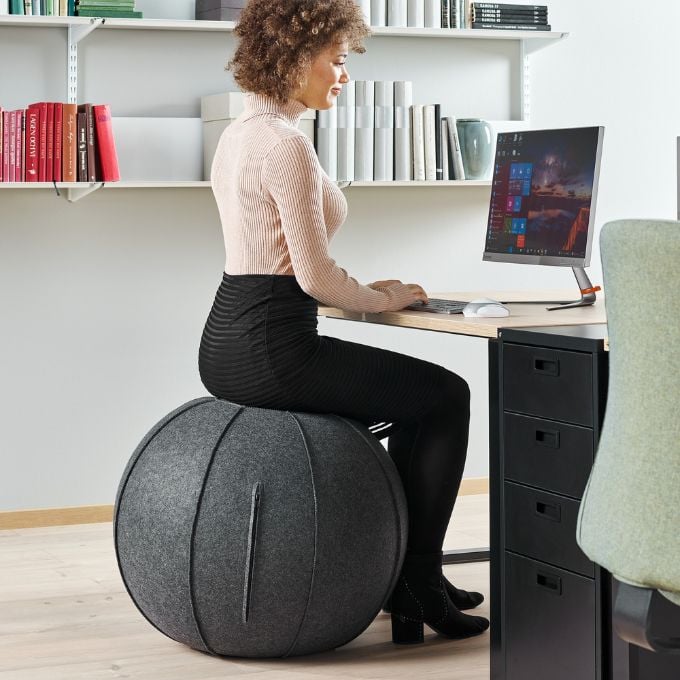
An active sitting chair allows you to keep moving even when you’re seated. It encourages natural posture shifts similar to standing or walking. Start by using your active chair for an hour or two each day. As your core muscles strengthen and your spine adjusts, it’ll become easier to sit actively for longer periods.
Hold standing meetings for better focus
Do you have a lot of meetings at work? That’s another opportunity to stand. With a sit-stand meeting table, you can easily host stand-up meetings — helping to keep discussions short and focused.
Make gradual changes for long-term results
The most important thing is to start changing your behaviour at work to increase your physical activity and reduce your risk of health problems. Gradual changes are easier to sustain over the long term, so take it one step at a time and don’t try to run before you can walk.
If you can, get some colleagues involved — it’s always easier to maintain new habits with support.