- AJ Izdelki
- Blog
- Ergonomija na delovnem mestu
- How to design for better acoustic ergonomics in the workplace
How to design for better acoustic ergonomics in the workplace
Why acoustics matter in the workplace
What is sound, really?
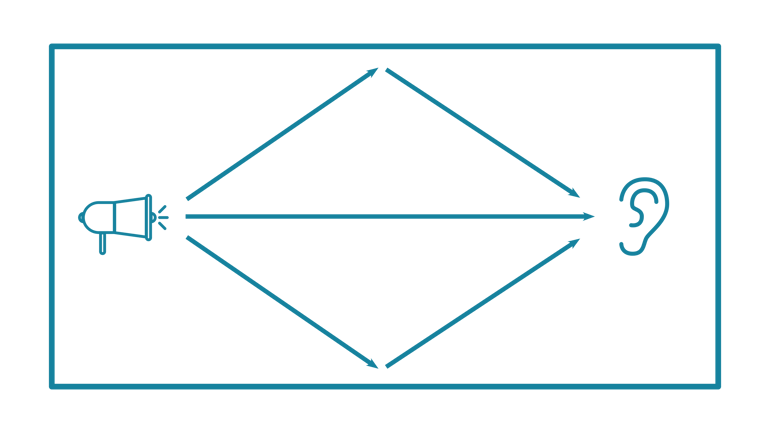
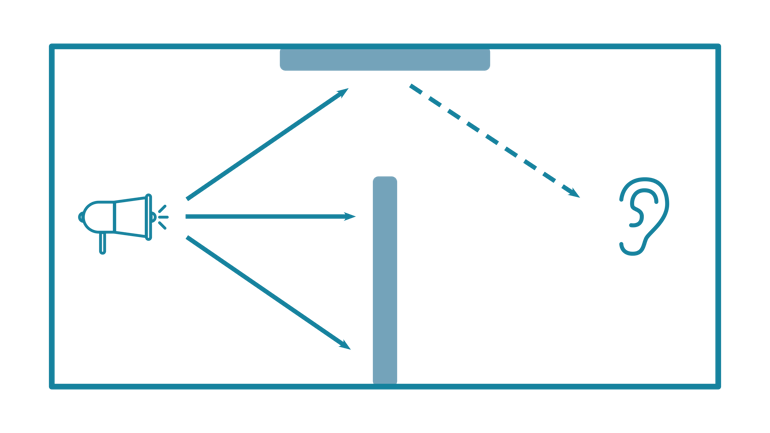
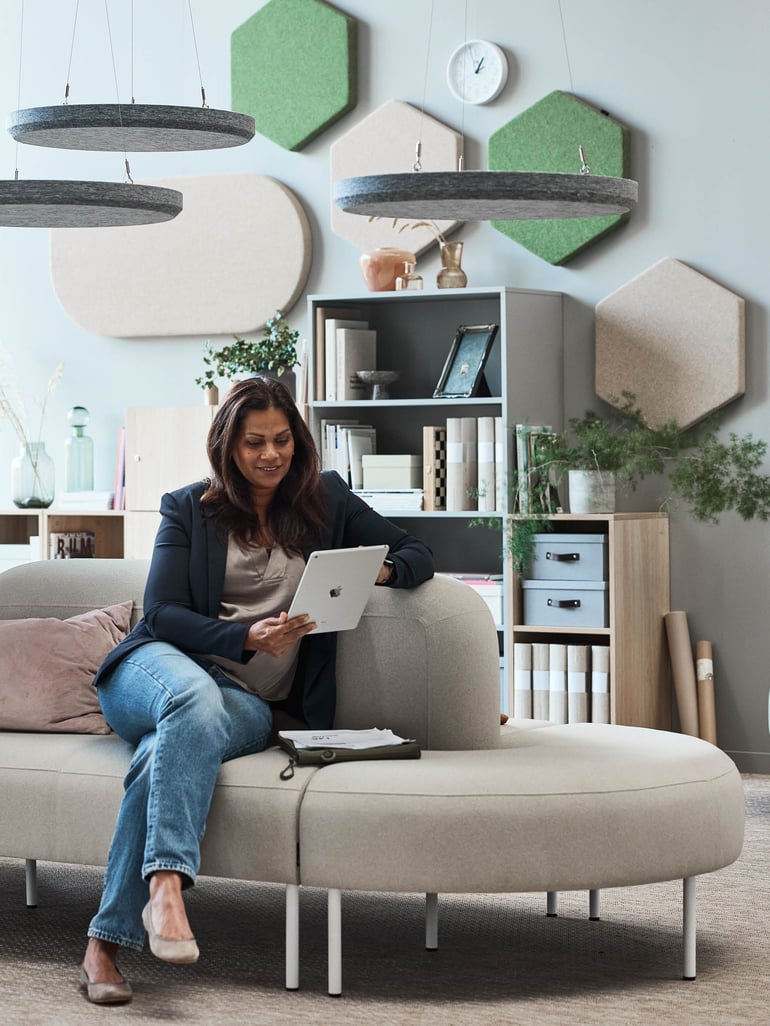
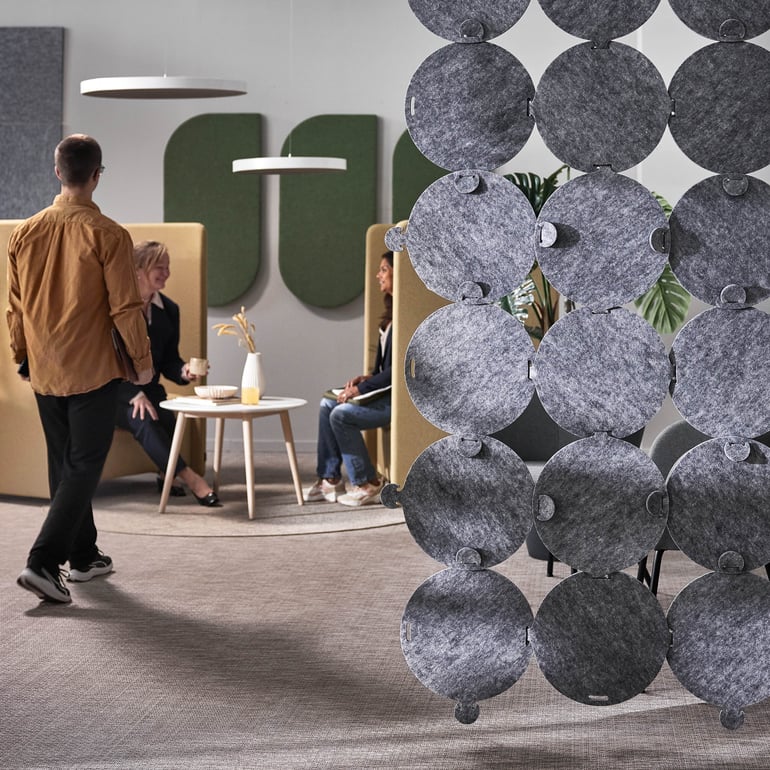
How to improve acoustic ergonomics in the workplace
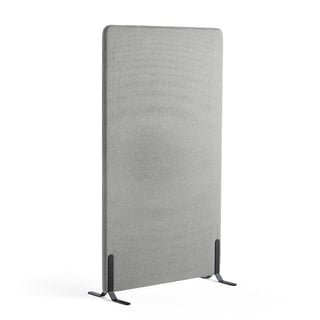
- Acoustic design: Use sound-absorbing materials such as screens, textiles and panels.
- Zoning: Create quiet areas for focused work, collaboration zones and separate meeting rooms.
- Behaviour: Encourage good acoustic habits, such as minimising phone rings and holding meetings in enclosed spaces.
Effective acoustic ergonomics comes from thoughtfully combining materials, furniture and behaviour so that sound levels remain comfortable throughout the working day.
Discover our blogs about ergonomics in the workplace
How to block and reduce noise
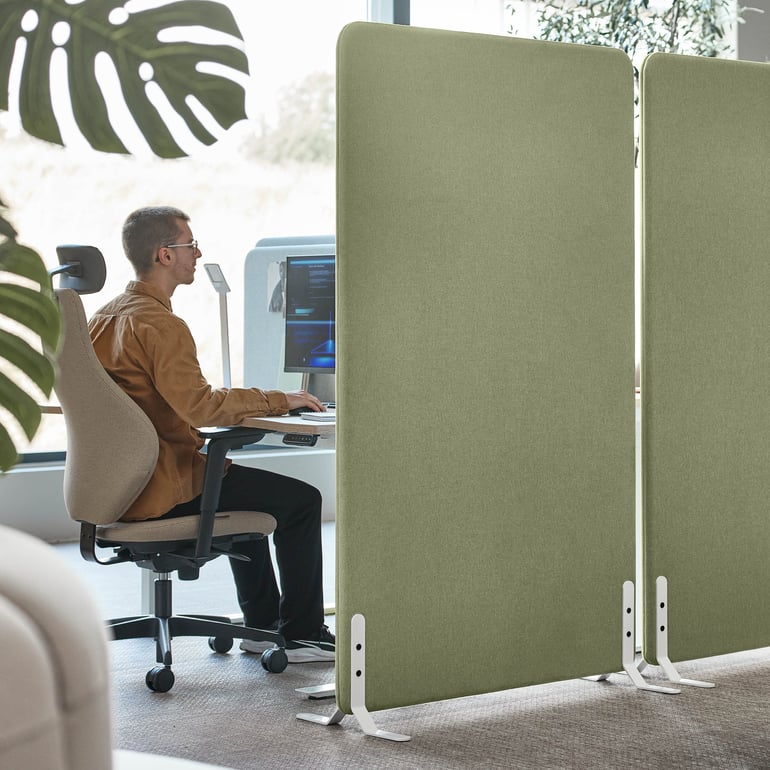
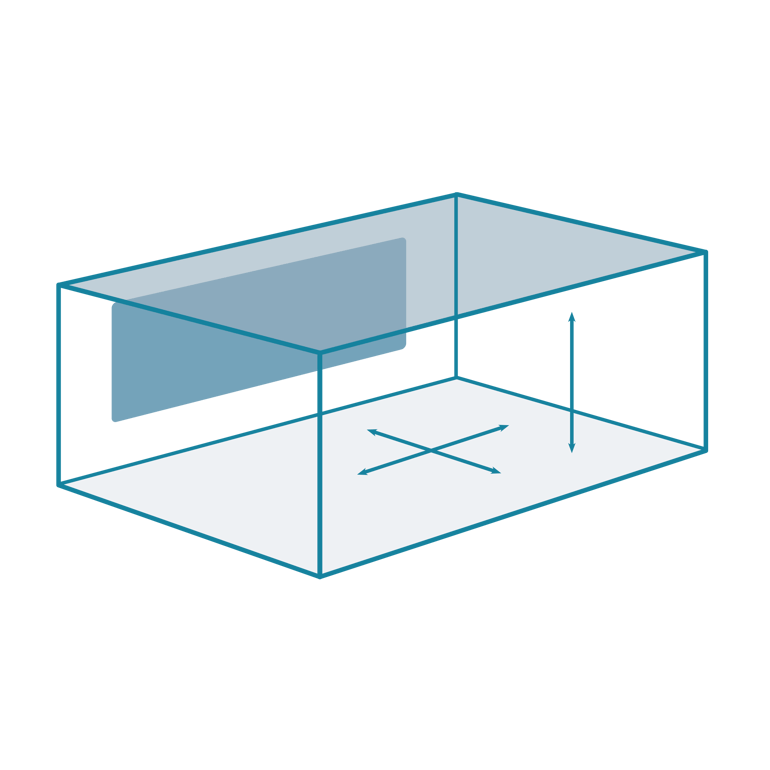
Acoustic panels for walls and ceilings
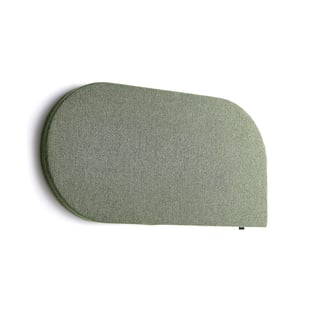
Using the walls and ceiling is an effective way to reduce noise in the workplace. Acoustic wall panels should ideally cover about 10-15% of the wall surface and be placed at ear height. Panels mounted slightly away from the wall provide extra absorption, as sound waves pass through the panel, bounce off the wall and pass through again.
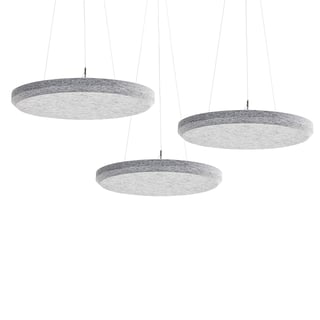
Acoustic ceiling panels plays a key role in open spaces, as the ceiling is often the largest surface in the room. Whether direct-mounted or hanging models are best depends on the layout and ceiling height. Cylinders installed at different levels can create a dynamic design while improving sound control.
With the right design, acoustic wall panels can also enhance the interior. Colourful panels and printed acoustic wall panels bring both calm and inspiration to the workspace.
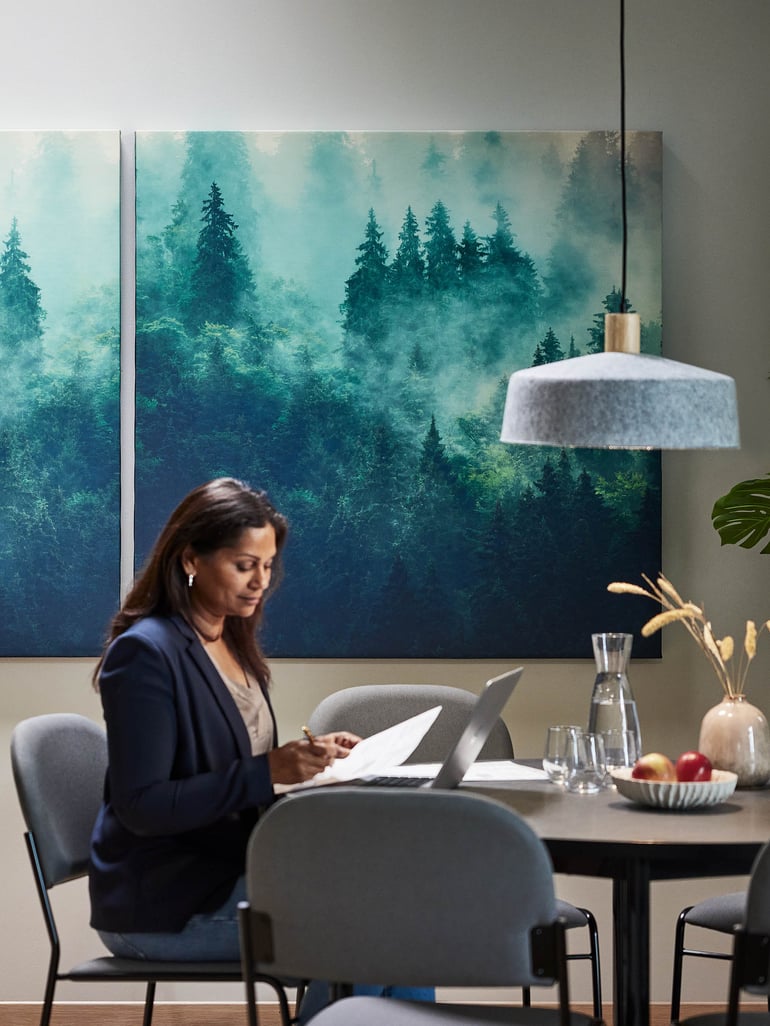
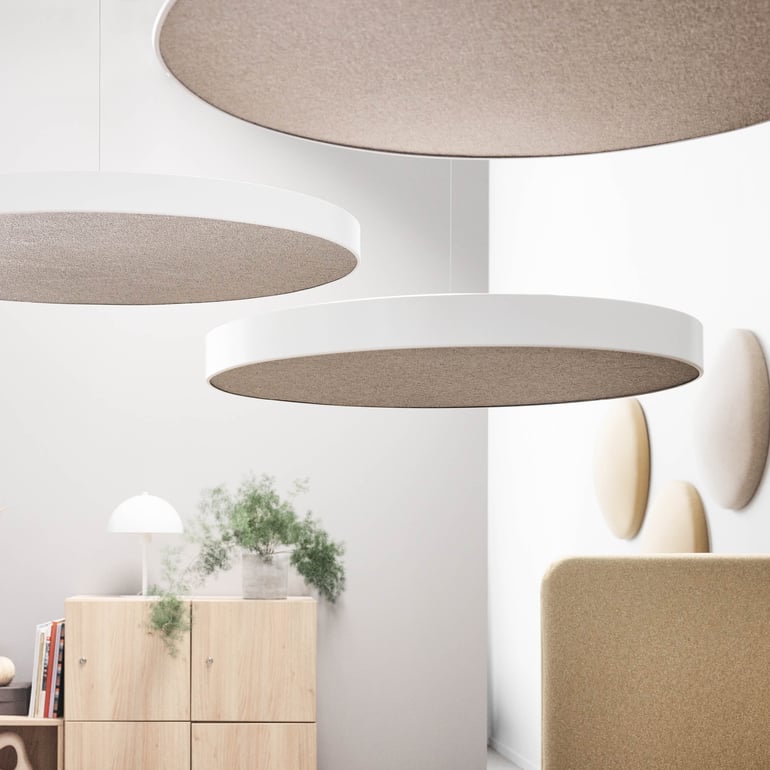

Invest in an ergonomic sound environment and improve concentration by up to 50%
Products for acoustic comfort
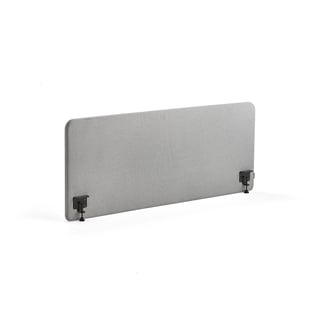
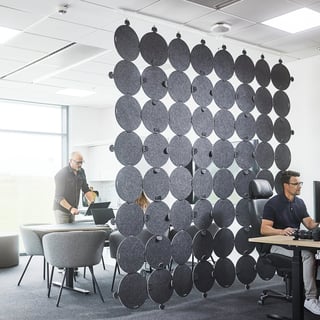
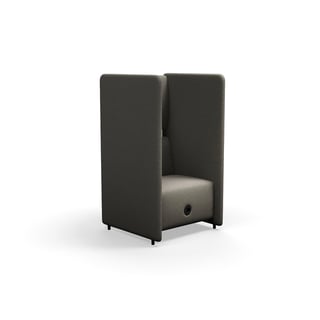

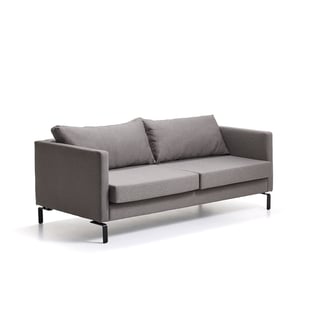
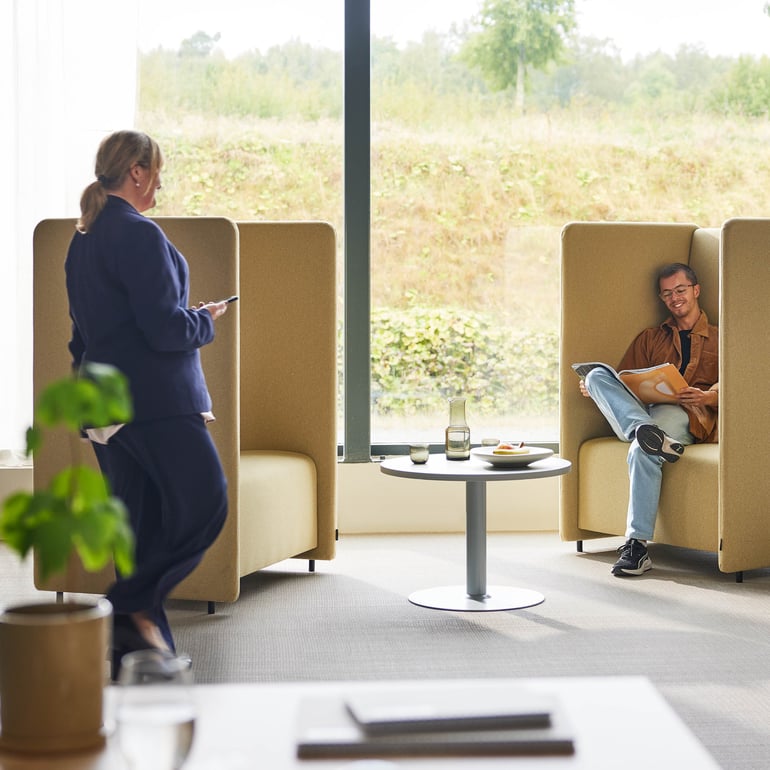
Reduce noise with textiles and furniture
Practical tips for a quieter office
- Place noisy machines such as printers and copiers in separate rooms or behind acoustic screens.
- Divide open offices into zones, with quiet areas for focus and designated spaces for calls or meetings.
- Prevent scraping sounds by using felt feet on chairs and tables, or opt for chairs with glide feet that slide smoothly across the floor
- Book meeting rooms instead of having spontaneous discussions at desks.
- Use vibration mode or visual notifications instead of ringtone alerts on phones, laptops and other devices.
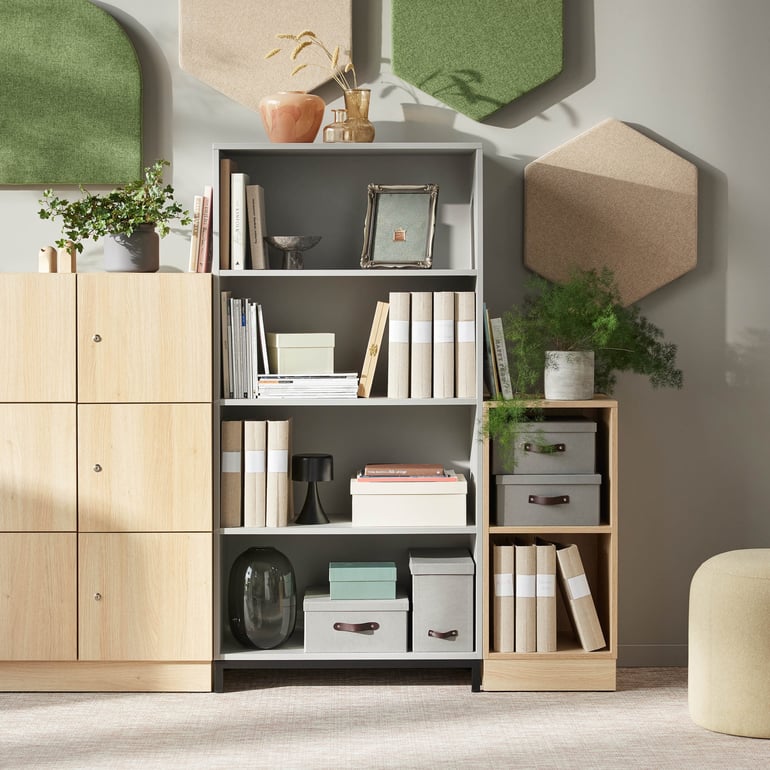
- Add open shelving with books, binders and plants to help break up sound waves.
- Avoid glass-fronted or closed storage with hard doors, they reflect noise rather than absorbing it, which can cause unwanted echo.
Summary
Would you like to know more about how sound, light and movement work together to create a healthy workplace?